For businesses, maintaining a competitive edge requires more than just innovative products or services. It demands a cohesive, well-informed workforce operating under clear, consistent guidelines.
Unfortunately, many businesses operate with informal or outdated policy guidelines, leading to inconsistent decision-making, misunderstandings and Human Resource compliance risks.
For many business leaders, the challenge lies in knowing where to start or how to maintain an effective handbook over time. Partner with PrestigePEO’s expert Human Resource support to create or update compliant, modern employee handbooks tailored to your company’s needs.
In this article, you’ll learn:
- How employee handbooks give employees clear expectations and reduce confusion.
- Why updating your handbook regularly helps your business stay aligned with changing labor laws.
- How a handbook supports company culture by reinforcing your values and workplace standards.
- How consistent policies promote fairness, build trust and reduce workplace conflicts.
- How PrestigePEO helps businesses create, update and maintain handbooks with clear policies, ongoing support and training.
What an Employee Handbook Is and Why Every Business Needs One
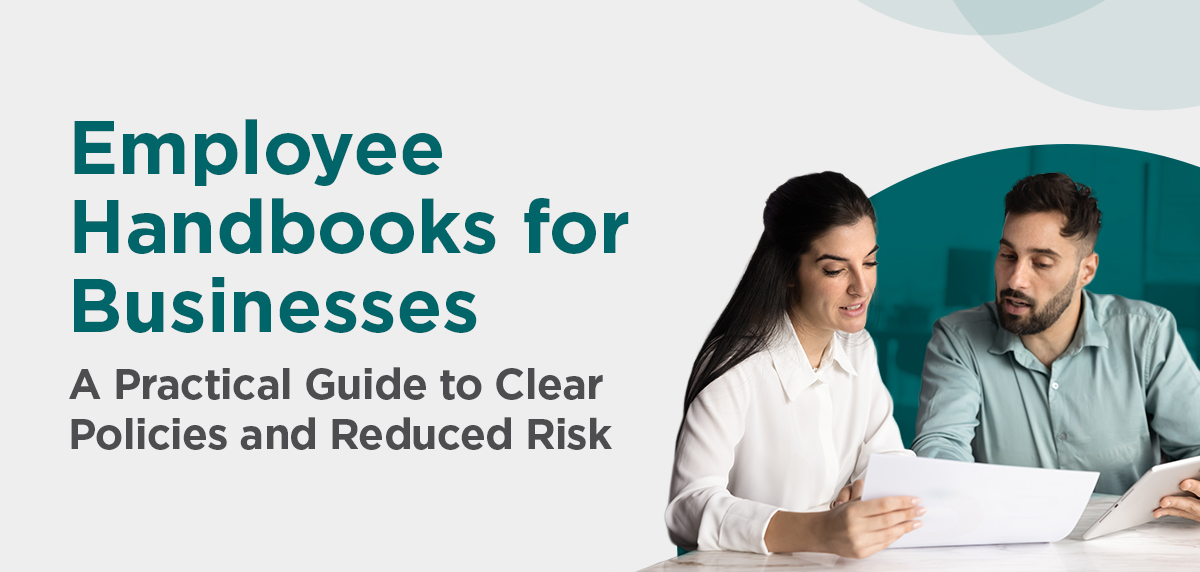
Employee handbooks for businesses outline the policies, procedures and expectations employees need to understand how your company operates. They serve as a clear roadmap, covering everything from company culture to day-to-day guidelines and legal obligations.
A strong handbook brings clarity and structure to your workplace. It helps employees understand their roles, reduces confusion and supports consistent decision-making across teams. Handbooks also support compliance by keeping your business aligned with labor laws as they change. They reinforce your company’s values, help build a positive culture and reduce risk by documenting expectations and procedures.
Without a current handbook, businesses face inconsistent enforcement, employee disputes and unnecessary legal exposure.
What Every Employee Handbook for Businesses Should Include
An effective employee handbook should include key policies, each serving a specific purpose:
- Code of conduct: Sets expectations for how employees behave and interact at work, which helps maintain a respectful, professional environment and gives managers a clear standard to point to when issues come up.
- Anti-discrimination and harassment policies: Explains what discrimination and harassment look like and how employees can report concerns, which helps create a safer workplace and lowers the risk of serious complaints or legal action.
- Leave and time-off policies: Describes the types of leave available and how employees request time away from work, which reduces confusion, supports consistent decisions and helps your business follow applicable leave laws.
- Remote work policies: Outlines who can work remotely, how often and under what conditions, along with expectations for communication and security, so employees understand how to work effectively outside the office while protecting company information.
- Health and safety policies: Cover procedures for reporting hazards, handling incidents and following safety rules, which help protect employees from harm and reduce potential liability for the business.
- Cybersecurity policies: Explains how employees should handle passwords, devices and company data, which lowers the chance of data breaches and supports compliance with privacy and security requirements..
- Performance management and evaluation: Describes how and when performance reviews happen, what managers look for and how feedback is shared, giving employees a clear view of expectations and helping leaders apply standards fairly.
- Disciplinary procedures: Lays out the steps the company takes when policies are not followed, such as verbal warnings or written notices, which creates a consistent process and helps protect the business if disputes arise.
- Grievance and complaint procedures: Explains how employees can raise concerns, who they can talk to and what happens next, which helps issues surface early and shows employees that leadership takes feedback seriously.
- Confidentiality and non-disclosure: Defines what information the company considers sensitive and how employees must handle it, which helps prevent data leaks and protects your business interests.
Each of these policies is important for maintaining a well-functioning, compliant workplace. These sections ensure your team understands company policies and expectations, supporting a well-organized, compliant workplace.
Common Mistakes and How to Avoid Them
When building or updating employee handbooks for businesses, leaders often run into the same avoidable challenges. Here is how to identify these issues and prevent them.
Relying on Outdated or Generic Templates
Many businesses download a template and assume it covers everything, but most templates do not match current labor laws or your actual workplace policies.
How to avoid it:
Review every section and tailor it to how your business operates. Update policies so they reflect current practices, not generic assumptions. A tailored handbook gives employees accurate guidance and helps reduce compliance risk.
Going Too Long Between Updates
A handbook quickly becomes outdated as laws and internal policies change. An outdated handbook creates unnecessary compliance risk.
How to avoid it:
Set a regular review schedule. Revisit the handbook at least once per year, or sooner if regulations change. Treat the handbook as a living document that grows with your business.
Using Complicated or Technical Language
Dense, formal language makes policies hard to understand. If employees can’t follow the content, they can’t follow the policy.
How to avoid it:
Use clear, simple language. Write policies the same way you would explain them in a conversation with an employee. Straightforward language increases understanding and reduces confusion.
Distributing the Handbook Without Training
Handing employees a handbook without guidance leads to misunderstandings and inconsistent application of policies.
How to avoid it:
Share the handbook with employees during onboarding and hold short training sessions when updates occur. Give employees time to ask questions. When policies are explained well, employees feel more confident and informed.
Trying to Manage the Handbook Without Professional Support
Many businesses try to create or update their employee handbooks on their own. Without Human Resource or compliance expertise, important policies may be missed or written in ways that do not match current laws or real workplace practices. This risk grows for businesses with employees in multiple states.
How to avoid it:
Partner with a professional like PrestigePEO. Our Human Resource team gives businesses guidance from experts who understand current laws and best practices. You get support that keeps policies accurate and consistent without placing the entire responsibility on internal staff.

Let PrestigePEO Craft an Effective Employee Handbook
Creating and maintaining an employee handbook takes time, attention and a strong understanding of state and federal regulations. PrestigePEO helps businesses build and update handbooks that are clear, accurate and aligned with your workplace.
Expertise and experience
Our Human Resource team builds handbooks that follow current laws and reflect real workplace needs. We help you choose the right policies, write them in clear language and organize the handbook so employees can easily understand expectations.
Customization
Every business has its own culture, structure and way of working. We learn how your company operates and shape policies around your actual practices. PrestigePEO also supports multi-state alignment, which is especially important for businesses with remote or dispersed teams.
Ongoing support and updates
Your handbook should never sit on a shelf. Labor laws shift frequently, and internal policies change as your business grows. PrestigePEO reviews your handbook regularly and updates it when laws or workplace expectations change. This ongoing support helps you stay compliant and avoid outdated or inaccurate policies.
Training and implementation
We do more than deliver a document. PrestigePEO helps you introduce the handbook to employees, answer questions and reinforce expectations. We also build updates into your Human Resource systems and onboarding workflows so new and current team members always have the most recent information. This support makes the handbook easy to understand, easy to access and easy to follow.
Risk management
A well-built handbook reduces legal risk, but only if it stays current and employees understand it. PrestigePEO helps businesses avoid common compliance mistakes and gives leaders a clear path forward when policy questions come up. Our HR team gives you confidence that your policies are accurate, consistent and ready to support your business.
Build a Strong Foundation for Success with a Comprehensive Employee Handbook
Understanding the value of employee handbooks for businesses is not just a legal necessity. It is a strategic tool that enhances business value by reducing risk, improving culture and ensuring consistency across the organization.
A well-crafted handbook serves as a roadmap for employees, aligning them with the company’s mission and values while safeguarding against potential legal issues.
PrestigePEO offers a practical, solutions-oriented approach. With our expert Human Resource support, businesses can navigate the complexities of handbook management confidently, ensuring small business HR compliance and fostering a positive, cohesive workplace culture.
Contact PrestigePEO today to learn how we can help you create or update your employee handbook so it meets your business needs and supports long-term success.