
Understanding ADA Responsibilities as our Workforce Grows
As organizations scale, ADA compliance becomes more complex and more critical. Employer responsibilities extend beyond policy language and into everyday employment decisions that can impact risk, culture, and employee trust.
Explore how ADA requirements apply to employers and why proactive compliance oversight matters for growing businesses.

Are Your Workers Classified Correctly?
The Hidden Risk of 1099 vs. W-2 Misclassification
Many employers rely on independent contractors without realizing how easily misclassification can occur. Federal and state agencies continue to scrutinize worker classification, and mistakes can trigger fines, back taxes, and legal disputes.
Learn what separates 1099 contractors from W‑2 employees, and why proper classification is critical for protecting your business.
Managing Compliance Across State Lines
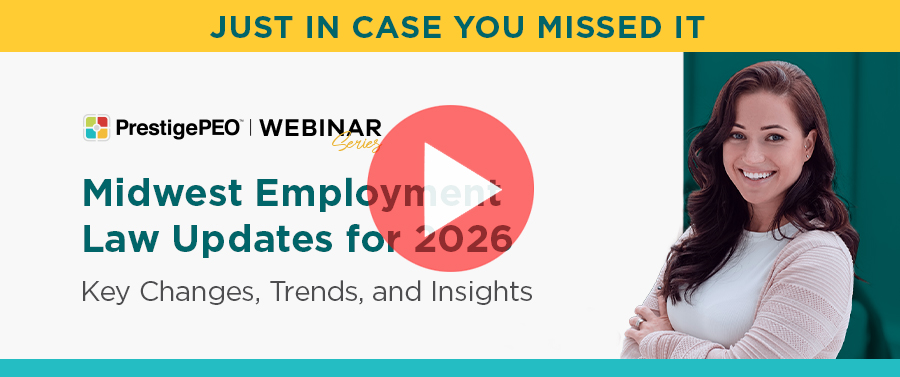
Watch: Midwest Employment Law Updates for 2026
From state‑specific employment laws to shifting workplace standards, Midwest employers face increasing compliance pressure in 2026. Missteps can lead to audits, penalties, and operational disruption.
This webinar replay breaks down the most impactful legal updates affecting employers across multiple Midwest states and outlines where businesses should be paying closer attention.

Stability Starts with Protection
Workers’ Compensation Support Built for Growing Employers
As businesses grow, workers’ compensation responsibilities become more complex. From safety planning to claim response, gaps in oversight can create unnecessary financial and operational strain.
Explore how integrated workers’ compensation support helps employers stay compliant, manage risk, and build a safer, more resilient workplace.

DOL Proposes New Rule on Independent Contractor Classification
The U.S. Department of Labor (DOL) recently proposed a new rule that would change how businesses determine whether a worker is an independent contractor or an employee under the Fair Labor Standards Act (FLSA). The proposal aims to provide clearer guidance for employers and workers as classification standards have shifted multiple times in recent years.
Worker classification is a key compliance issue for employers. Employees are eligible for federal wage protections like minimum wage and overtime under the FLSA. However, independent contractors are usually seen as running their own businesses and do not fall under these rules. If a worker is misclassified, employers could face liability for back pay, taxes, and penalties.
Key Elements of the Proposal
The proposed rule applies an “economic realities” analysis to determine whether a worker is economically dependent on a business or operates independently. It clarifies that the focus should be on the actual working relationship between the parties, rather than just what might be written in a contract. The rule highlights two main factors:
- Control over the work. This considers how much control the worker has over how the work is performed.
- Opportunity for profit or loss. This assesses whether the worker can increase earnings through business decisions or by taking on additional clients.
If those factors do not clearly resolve the issue, the rule allows employers to consider additional factors, including the level of skill required, the permanence of the working relationship, and whether the work is part of the company’s integrated operations.
Steps for Employers
Employers should ensure that contractor classifications comply with relevant state standards, which may be more stringent than federal rules. Several states, including New Jersey, California, Illinois, and Massachusetts, apply the stricter ABC Test. According to this system, a worker is generally presumed to be an employee unless the employer can demonstrate that the individual operates an independent business.
The proposed rule will undergo a public comment period before being finalized, with the final rule potentially taking effect later in 2026. In the meantime, employers that depend on independent contractors should review their current arrangements to ensure they comply with both federal guidance and applicable state laws. Staying proactive can help minimize the risk of misclassification claims as the regulatory landscape continues to change.
Worker classification decisions carry meaningful legal and financial risk, particularly as federal and state standards continue to shift. Employers that rely on independent contractors should take a proactive approach, reviewing current classifications, understanding applicable state tests, and preparing for potential changes once the DOL finalizes its rule.
PrestigePEO helps businesses navigate complex employment regulations, reduce misclassification risk, and gain confidence in their workforce decisions through expert compliance guidance and integrated HR support.
If your organization works with independent contractors or is evaluating its classification practices, PrestigePEO is here to help you stay informed and protected.

EEOC Clarifies Telework as ADA Accommodation
The U.S. Equal Employment Opportunity Commission (EEOC) has issued guidance clarifying when telework qualifies as a reasonable accommodation under the Americans with Disabilities Act (ADA). While the guidance applies to federal agencies, it offers practical insight for private employers navigating return-to-office policies and requests for remote work from employees with disabilities.
The guidance clarifies that telework is only necessary when it enables an employee to perform their essential job functions, access equal employment benefits, or fully participate in workplace opportunities. Requests based solely on personal preference, convenience, or general symptom management, such as anxiety or fatigue, do not automatically meet this standard. Employers may, but are not required to, provide the accommodation an employee prefers if an equally effective alternative is available.
The EEOC also notes that accommodations are not automatically permanent. Employers can reevaluate telework arrangements when circumstances change, such as operational needs, shifts in job duties, or updated medical information. Employers may require in-person attendance when physical presence is necessary for supervision, collaboration, or other essential duties.
The guidance addresses common situations employers face today. For employees citing anxiety or other mental health issues, telework is not required unless the condition creates a substantial barrier to performing essential job functions on-site, and employers may assess whether in-office accommodations could address the employee’s needs.
Ultimately, the EEOC says telework is a way to help with job performance, not a right everyone automatically has. Employers can require workers to be in person, when necessary, as long as they discuss it and make decisions based on the individual’s needs and evidence.
PrestigePEO helps businesses navigate complex ADA obligations, accommodation requests, and workforce policies with expert compliance guidance and practical HR support.
If your organization is managing telework requests or refining return‑to‑office expectations, PrestigePEO is here to help you move forward with confidence.

New York Secure Choice Retirement Savings Program Deadline Reminder
The time has come for the launch of New York’s Secure Choice Retirement Savings Program and with it comes a few important deadlines and requirements for employers in the state.
As a reminder, in October 2025, New York launched its state-sponsored retirement savings program known as the Secure Choice Retirement Savings Program. The Program is designed to help more private-sector employees save for their future. Participation in this program or another qualified retirement plan is mandatory for businesses that meet certain criteria. An employer is required to register for the program if they:
- Have been in business for at least two years;
- Employed 10 or more employees in New York in the previous calendar year; and
- Do not offer employees a qualified retirement plan.
If an employer currently offers a qualified retirement plan to its employees or is too new or small, then that employer must certify their exemption from the program by logging in to the program portal using the unique access code, provided to them by the state, and their EIN. If an employer does not know or cannot find their access code, then they may acquire another code through the portal as well.
Businesses may claim exemption to the Program by sponsoring another qualified retirement plan. Eligible plans include:
- 401(k)
- 403(b)
- Starter-k
- Simplified employee pension (SEP) IRA
- SIMPLE IRA
The compliance dates for employer registration and exemption certification are based on employee count. The applicable deadline dates are listed below:
- March 18, 2026: Employers with 30 or more employees
- May 15, 2026: Employers with 15 to 29 employees
- July 15, 2026: Employers with 10-14 employees
Employers should take into account their employee headcounts or if their sponsored retirement plan is qualified for exemption. If an employer does not qualify for an exemption, then they should consider establishing a separate retirement plan for their employees or whether registration for the state program is the most appropriate option. At this time, New York businesses are not subject to penalties for non-compliance, though a penalty structure is currently in review.
Regardless of registration or exemption, New York employers should begin to gather information and data to provide to the state and ensure that any payroll providers or software utilized are capable of making the necessary deductions.
Employers and employees may find all the appropriate information on the program through the state’s website.
PrestigePEO helps New York employers navigate retirement plan compliance, payroll integration, and workforce planning with expert guidance and integrated support.
If your organization is evaluating Secure Choice requirements or considering retirement plan options, PrestigePEO is here to help you move forward with confidence